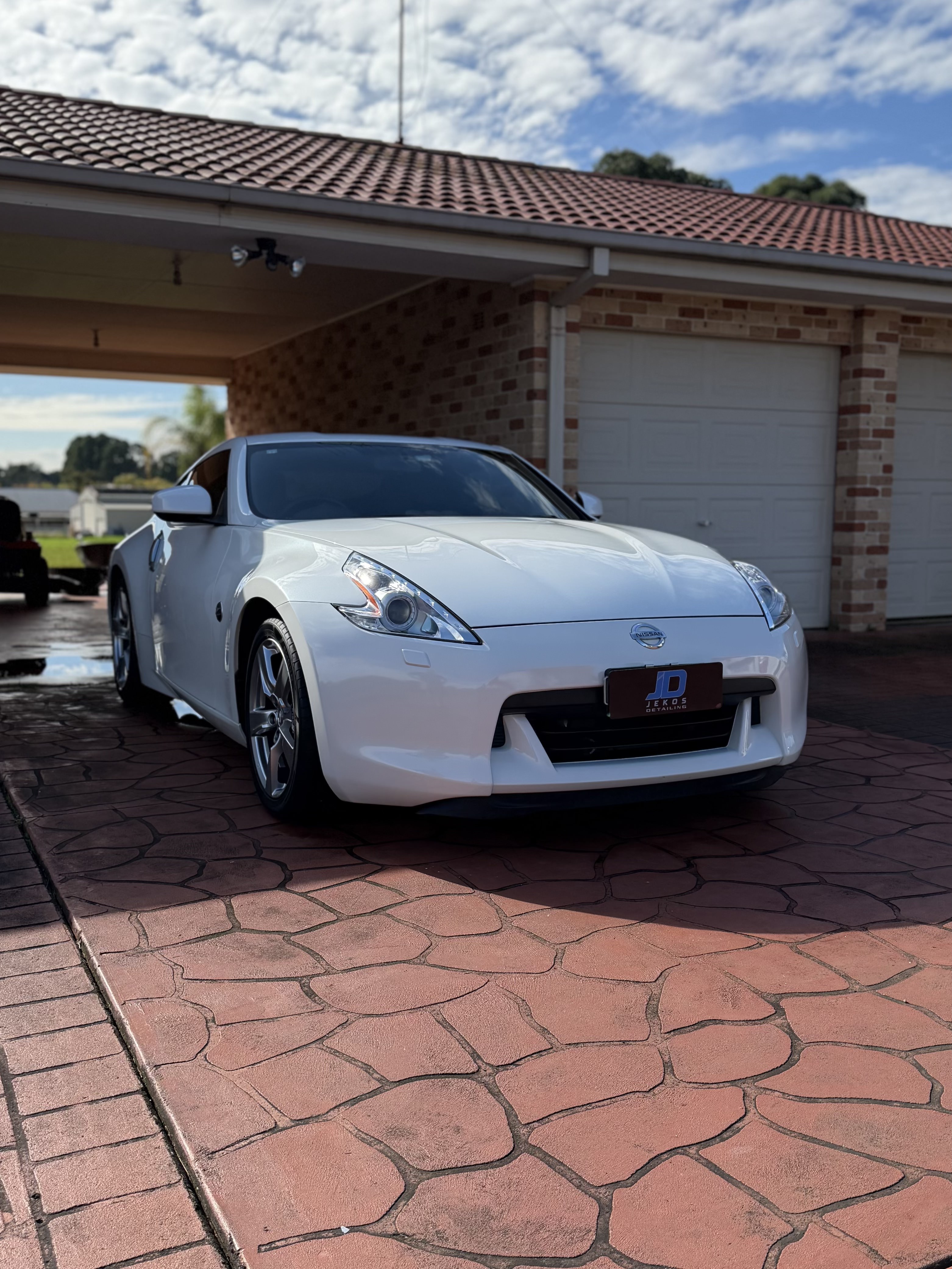
Wax, sealant, ceramic, graphene — paint protection has more options than ever and most aren't worth your money. Here's the honest ranking from a working Sydney mobile detailer.
If you want serious paint protection in Sydney, your real options are wax, sealant, ceramic coating, and graphene coating — in roughly that order, worst to best, for how well they actually hold up to our climate.
For most owners, a quality ceramic coating is the right answer. It's the option that gives you years of protection, real warranty backing, and a maintenance routine that's genuinely sustainable. Wax and sealant are short-term band-aids; graphene is a small upgrade in specific situations. The honest ranking only takes a few minutes to explain — and once you know it, choosing the right product for your car gets a lot easier.
All four products are technically "paint protection," but what they deliver in real-world Sydney conditions is wildly different. Here's what each one is actually doing on your clear coat.
Car wax is the traditional paint protection product, and the cheapest. It's typically a blend of natural waxes (carnauba being the gold-standard ingredient) and oils that sit on top of the clear coat, adding a glossy hydrophobic layer.
What you get: A noticeable improvement in gloss for a few weeks, plus modest water-shedding behaviour.
The honest catch: Wax typically lasts 4–8 weeks in Sydney conditions before it's gone. UV breaks it down fast, our heat speeds the process, and one decent wash strips a significant portion of what's left. If you want continuous protection, you're reapplying every month or two for the life of the car. The cumulative cost adds up to more than a ceramic coating within 18 months — and you do all the work yourself.
Right for: Show cars between events; weekend cars kept under cover; owners who genuinely enjoy waxing as a hobby.
Paint sealants are the next step up — synthetic polymer-based products that bond more aggressively to the clear coat than wax does. They came out of the marine industry and made their way to detailing in the 2000s.
What you get: Similar visual result to wax, but with a 4–6 month life instead of 4–6 weeks. Slightly tougher water beading and a thinner, slicker surface feel.
The honest catch: Better than wax but still nowhere near a ceramic coating. You're reapplying twice a year minimum, the gloss starts dulling well before the protection runs out, and the UV resistance is still limited. The cost-per-year is lower than wax but still substantial.
Right for: Owners who want better than wax but aren't ready to commit to a ceramic coating; cars being kept short-term before resale.
Ceramic coating is where paint protection gets serious. A ceramic coating is a liquid silica-based polymer that, once applied and cured, chemically bonds with the clear coat to form a hard, glossy, UV-stable protective layer. We've written the full how long does ceramic coating last guide on this — but the headline is that a professional ceramic coating delivers 3 to 10 years of paint protection depending on the tier you choose, with the right maintenance routine.
What you get: A hard hydrophobic layer that resists UV fade, makes bird droppings dramatically easier to spot-clean, dramatically reduces the time spent washing, and holds a deep wet-look gloss for years. A proper ceramic coating is genuinely transformative — the difference between needing a full wash every weekend versus a 15-minute rinse-down.
The honest catch: It costs more upfront than wax or sealant, and the application has to be done properly. A poorly-applied ceramic coating delivers less than a well-applied sealant. This is the main reason it's worth paying for professional application rather than DIY.
Right for: The vast majority of Sydney car owners — daily drivers, family cars, prestige cars, and anyone keeping the car more than 18 months.
Graphene coating is ceramic coating with graphene oxide added to the formulation. It's the newest option and gets the most marketing buzz. We've covered the full what is graphene coating guide and the ceramic vs graphene honest comparison elsewhere — but the short version is graphene gives you slightly better heat handling, slightly tighter water beading, and similar warranty durations, for 20–40% more cost.
What you get: All the benefits of ceramic, plus marginal improvements in three specific areas (heat dissipation, beading tightness, hydrophobic longevity).
The honest catch: The performance gains over a comparable ceramic coating are real but smaller than the marketing implies. For most Sydney drivers, the cost difference doesn't justify the upgrade — stepping up a ceramic tier delivers a bigger result for the same money.
Right for: Cars kept long-term (7+ years), dark paint cars in heavy unshaded sun, enthusiasts who want the latest tech.
Paint protection film (PPF) is a different category — it's a clear physical film that wraps over the paint and provides actual impact protection (rock chips, light scratches, kerb rash). It's not what we do, and we don't sell against it; if you're getting persistent rock chips on a daily commute or worried about front-end damage on a new prestige car, PPF is the right tool for that specific job. PPF and ceramic coating aren't substitutes — many owners get both. We focus on coatings because that's where we apply our expertise.
Three quick questions sort 90% of cases:
Paint protection in Sydney has more options than it ever has — but the right answer for most owners hasn't changed in years. A quality professionally-applied ceramic coating gives you the right balance of cost, longevity, gloss and maintenance simplicity. Wax and sealant are short-term measures that cost more over time. Graphene is a small upgrade that makes sense in specific situations.
The honest first step is to get in touch for a free assessment — we'll look at your car, how you use it, and where it lives, and tell you straight which option actually fits. Or read our full ceramic coating service page to see the tier breakdown and pricing.
★★★★★
Trusted by hundreds of Sydney car owners. Premium mobile ceramic coating that comes to your home — from Camden to Castle Hill.
Premium mobile ceramic coating, applied at your home, backed by a real warranty. Free no-obligation assessment, usually within 24 hours.
Mobile service across Sydney · 5★ rated on Google · Real warranty